
Seriously.
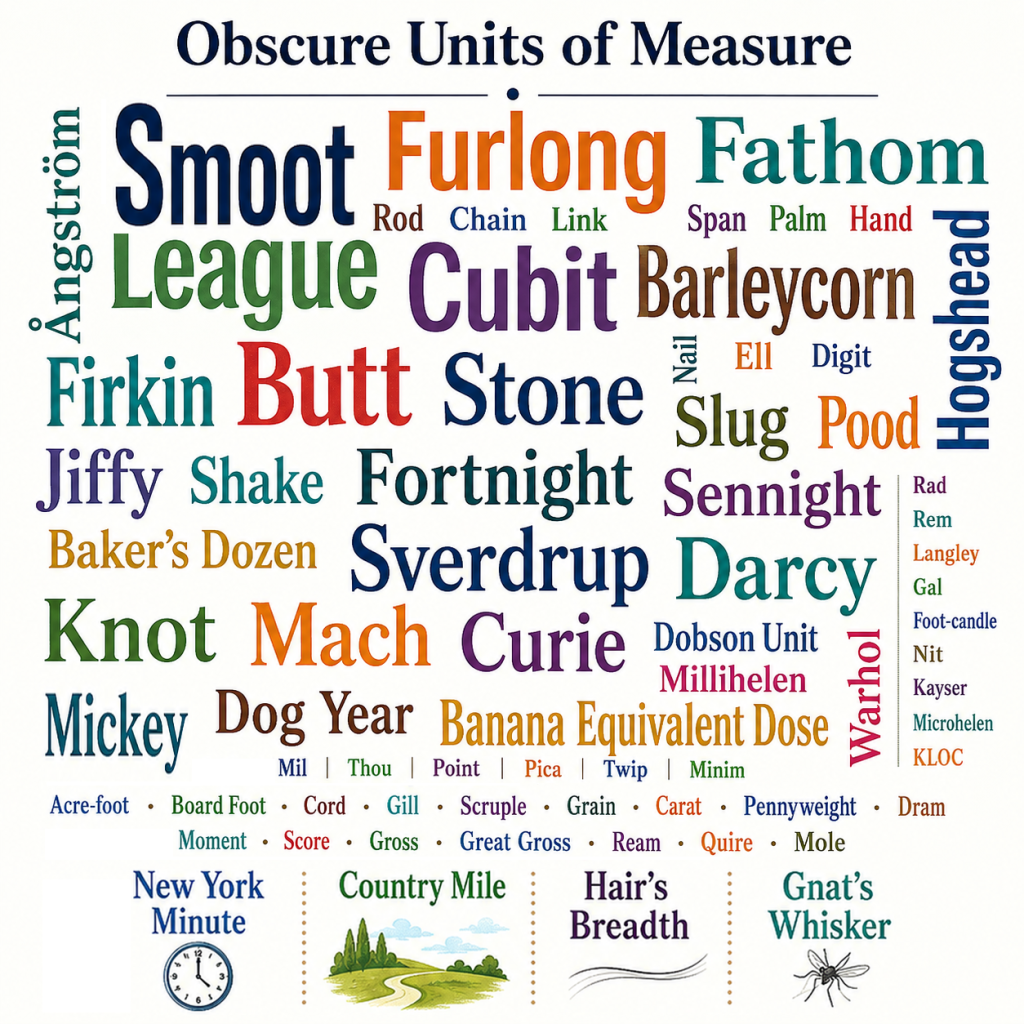
A butt was once a legitimate unit of measure used for large casks of wine. A wine butt was commonly around 126 gallons. This got me thinking about something we run into all the time when working with manufacturing data: every organization has its own language.
Sometimes it’s jargon. Sometimes it’s units of measure.
Pounds. Kilograms. Linear feet. Linear meters. Parts per minute. Parts per hour. Tons. Gallons.
What seems completely normal in one facility can sound strangely specific in another. Sometimes the measurements get even more interesting.
One of my favorites is the Smoot — based on the 5’7″ height of MIT student Oliver Smoot, who was used as a human measuring stick to measure the Harvard Bridge.
Funny? Absolutely, but there’s a serious point behind it:
Data only becomes useful when it is presented in a way that makes sense to the people using it.
Having the number sitting in a SQL database somewhere isn’t the same as having useful information. You need the:
- Right data
- Right units
- Right context
- Right place
- Right people
If the production team thinks in linear feet per minute, showing them meters per hour because that’s how the database stores it isn’t particularly helpful.
The technology should adapt to the operation, not force the operation to adapt to the technology.
While I don’t think anyone is running a production report in buttloads anymore, it is a good reminder that units of measure have always evolved around the way people actually work.