
The five-second rule usually means:
- You drop a piece of toast on the floor.
- You stare at it.
- You make a questionable judgment call.
- You eat it anyway.
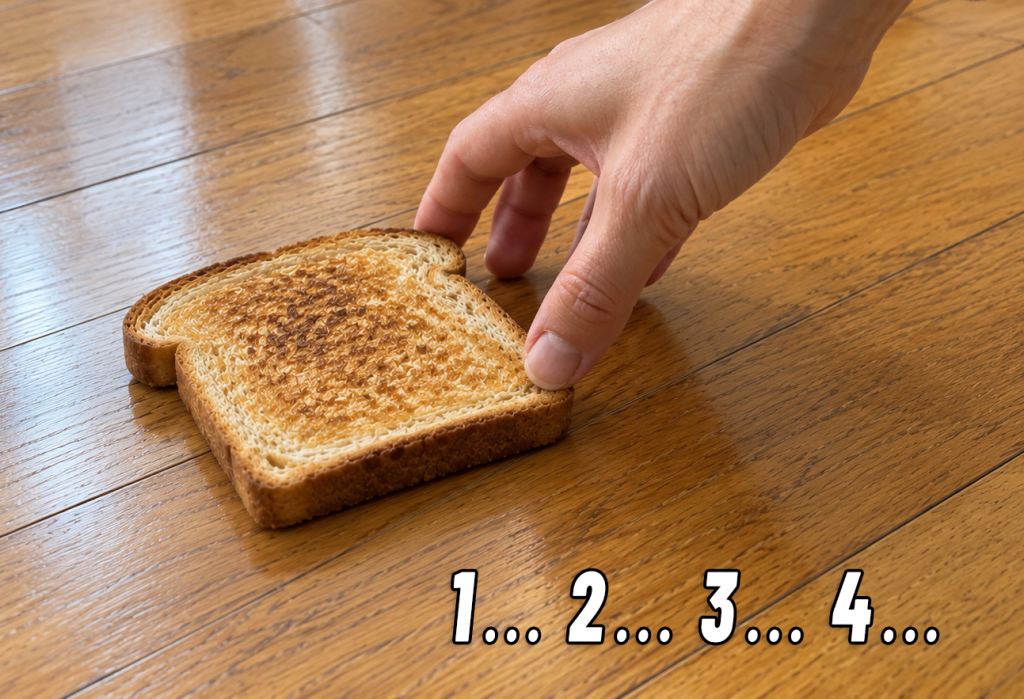
But in a visual factory, the five-second rule means something else – Can someone understand your display in five seconds or less?
If I walk past a screen on the plant floor, I should be able to tell:
- Are we on target?
- Is something wrong?
- Do I need to do something?
- That’s it.
If I need to stop, squint, study a chart, read six widgets, and mentally calculate whether 742 is good or bad… we’ve already lost. The question becomes, “How do we win?“
Here are three DOs:
- Show actual vs. target.
“742” is a number.
“742 of 800” tells me something. - Make problems obvious.
Running. Stopped. Behind. Quality issue. Maintenance needed. Don’t make people hunt for the problem. - Display what matters next.
A good display should help drive action, not just report history.
Here are three DON’Ts:
- Show too much information.
Your plant-floor display is not supposed to look like the cockpit of a 747. - Provide numbers without context.
Data without a target, trend, or status is just… data. - Display too much dashboard decoration.
More gauges, colors, charts, and animations do not automatically equal better communication.
The goal of a visual factory display isn’t to impress people. It’s to communicate, preferably before that toast hits second number six.
Leave a Reply